A Failed PSI Is Evidence, Not Just Bad News
A failed pre-shipment inspection can feel stressful when your supplier is asking for final payment, your freight booking is approaching, and your sales schedule depends on the goods shipping on time.
But a failed inspection is useful evidence. It gives you a chance to correct problems before the products leave the factory, while you still have leverage and practical options.
The real question is not only whether the inspection passed or failed. The more important question is what you should do next.
Need help reviewing a failed PSI before your supplier ships? Request a pre-shipment inspection or re-inspection before approving shipment.
What Does It Mean When a Pre-Shipment Inspection Fails?
A pre-shipment inspection fails when the inspected goods do not meet the agreed inspection criteria. This may be due to product defects, quantity shortages, wrong specifications, packaging problems, labeling errors, carton issues, failed function tests, or defects above the agreed acceptance level.
A failed PSI does not automatically mean the entire order must be cancelled. It means the buyer should pause, review the evidence, discuss corrective action with the supplier, and decide the next step.
| Reason a PSI may fail | What it means for the buyer | Typical next step |
|---|---|---|
| Critical defects found | The product may have safety, usability, or serious acceptance concerns. | Hold shipment until corrected and reviewed. |
| Major defects exceed the limit | The lot may not meet quality expectations or customer requirements. | Ask for sorting, rework, replacement, or re-inspection. |
| Wrong product specifications | Goods may not match the purchase order, approved sample, or product listing. | Confirm the deviation and request correction before payment. |
| Label or barcode errors | Inventory may face warehouse, receiving, or Amazon FBA problems. | Require relabeling and evidence before shipment. |
| Packaging or carton issues | Products may be damaged in transit or rejected by receiving teams. | Request repacking, stronger protection, or carton correction. |
Step-by-Step: What to Do After a Pre-Shipment Inspection Fails
When a PSI fails, do not respond emotionally or approve shipment too quickly. Use a structured review process and make the shipment decision from evidence, not pressure from the supplier or freight schedule.
- Read the full inspection report, not only the pass/fail result.
- Separate critical, major, and minor defects so the response matches the risk.
- Review the photos and ask whether findings are isolated examples or repeated patterns.
- Compare each finding against your purchase order, specifications, approved sample, packaging standard, labels, and inspection checklist.
- Ask the supplier for the root cause, corrective action plan, deadline, and evidence required before shipment.
- Decide whether to hold shipment, request rework, accept with comments, reinspect, partially accept, or reject.
Send a Clear Corrective Action Request
Do not simply tell the supplier that the inspection failed. Send a precise corrective action request that lists each issue, required fix, deadline, and evidence needed before shipment.
| Failed inspection issue | Correction to request | Evidence to request before approval |
|---|---|---|
| Wrong labels or barcodes | Remove incorrect labels and apply correct labels to units and cartons. | Close-up photos of corrected labels and barcode scans where possible. |
| Major workmanship defects | Sort the full lot, remove defective units, and rework or replace affected products. | Photos of sorted goods, reworked units, and replacement quantity. |
| Incorrect packaging | Repack according to the approved packaging standard. | Photos of retail box, inner packing, carton packing, and carton closure. |
| Function failures | Repair, replace, or reproduce affected units after identifying root cause. | Function test photos or short videos and re-inspection confirmation. |
Why a Failed PSI Can Protect Your Business
A failed inspection is frustrating, but it is usually better than discovering the same issues after shipment. Once goods leave the factory, the supplier may already have received payment, the goods may be on the water, and rework may require costly handling in the destination country.
A failed PSI gives you leverage because the goods are still at the supplier side. You can request correction, gather evidence, negotiate next steps, and avoid releasing final approval too early.
| Without a failed PSI report | With a failed PSI report |
|---|---|
| You may rely on supplier photos or verbal updates. | You receive structured findings, photos, defect observations, and a shipment-readiness conclusion. |
| Problems may be found only after arrival. | Problems can be addressed before goods leave the factory. |
| Final payment may be released before verification. | You can make the payment and shipment decision with better evidence. |
Separate Critical, Major, and Minor Defects
Not every defect has the same impact. A small cosmetic mark may be manageable. A functional failure, missing component, wrong material, incorrect barcode, or safety-related issue may require immediate correction.
| Defect type | Meaning | Buyer response |
|---|---|---|
| Critical defect | A serious issue that may make the product unsafe, unusable, or unacceptable for shipment. | Do not approve shipment until corrected and reviewed. |
| Major defect | An issue likely to affect saleability, function, customer acceptance, or brand reputation. | Request rework, sorting, replacement, or re-inspection. |
| Minor defect | A lower-severity issue that may not affect function but may indicate workmanship inconsistency. | Review the frequency and decide whether to accept, correct, or monitor. |
When Is a Re-Inspection Needed?
If the PSI failed because of major, critical, repeated, or unclear issues, a re-inspection is often the most practical next step. Supplier photos may be useful, but they are not the same as buyer-side verification.
A re-inspection can check whether the supplier actually corrected the problems across the lot, not only on a few selected units.
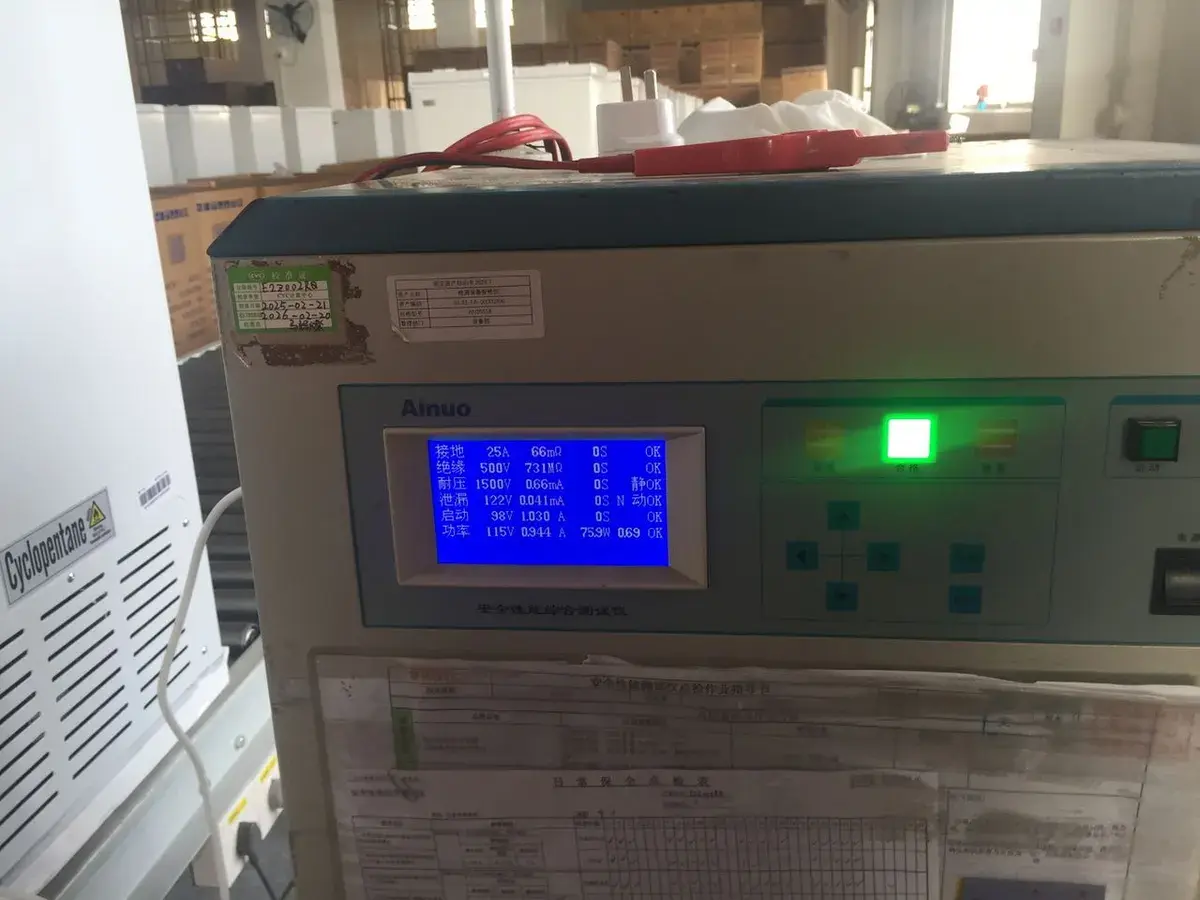
If your supplier says the problems are fixed, ask for objective verification before shipment when the risk justifies it.
Common Reasons a Pre-Shipment Inspection Fails
The exact reasons depend on the product and inspection scope, but importers often see similar failure patterns across consumer goods, ecommerce products, private label items, packaging, hardware, home products, textiles, furniture, and electronics.
- AQL result fails because major or minor defects exceed the agreed acceptance level.
- Critical defects are found, such as visible safety risks, broken components, contamination, or defects that make shipment clearly unsuitable.
- The product does not match the approved sample in material, finish, color, dimensions, components, accessories, printing, or construction.
- Workmanship is poor, with scratches, stains, cracks, loose parts, glue marks, poor stitching, damaged surfaces, or missing accessories.
- Packaging is incorrect or weak, including wrong boxes, poor inner protection, wrong carton quantity, damaged cartons, or weak sealing.
- Labels, barcodes, FNSKU, SKU labels, carton labels, or Amazon FBA details are wrong.
Should You Pay the Supplier After a Failed Inspection?
A failed PSI should trigger a careful payment decision. Whether you pay, hold payment, or negotiate depends on your contract, payment terms, defect severity, supplier relationship, shipment schedule, and commercial risk.
This is not legal advice. From a quality control perspective, paying the final balance before correction can reduce your leverage.
| Inspection situation | Payment risk | Practical buyer approach |
|---|---|---|
| Minor defects only, commercially acceptable | Low to moderate | Document acceptance and decide whether shipment can proceed. |
| Major defects above acceptance level | Moderate to high | Hold shipment approval and request correction before final payment if your terms allow. |
| Critical defects found | High | Do not approve shipment until corrected and reviewed. |
| Supplier promises correction but gives no evidence | High | Request photos, records, and re-inspection if needed. |
How to Decide: Ship, Rework, Re-Inspect, or Reject?
A failed inspection leads to a shipment decision. Base that decision on defect severity, quantity affected, product risk, customer expectations, destination requirements, marketplace requirements, and evidence that the supplier can correct the issue.
| Decision option | When it may be suitable | Buyer caution |
|---|---|---|
| Approve shipment | Findings are minor, within tolerance, and commercially acceptable. | Document that the buyer accepts the known issues. |
| Approve after correction photos | Issues are simple and easy to verify by photos, such as carton marks or label placement. | Photos may not prove the full lot was corrected. |
| Request rework and re-inspection | Defects are major, repeated, functional, or difficult to verify remotely. | Allow enough time before shipment. |
| Accept partial shipment | Some goods are acceptable and some require rework or replacement. | Separate accepted and rejected goods clearly. |
| Reject shipment | Critical defects, wrong product, severe quality failure, or unacceptable supplier response. | Review contractual and commercial implications. |
What to Include in a Corrective Action Email
A failed PSI should lead to a precise supplier email. Keep it factual and attach the relevant inspection report pages or defect photos.
- State that the pre-shipment inspection was not accepted based on the report findings.
- List each failed item by category: workmanship, function, packaging, labeling, quantity, or carton condition.
- Attach or reference the inspection photos and report sections.
- Explain the required correction for each issue.
- Ask the supplier to confirm root cause, corrective action plan, deadline, and evidence after correction.
- State that shipment approval is on hold until evidence is reviewed or re-inspection is completed.
Example: The pre-shipment inspection identified major defects and packaging issues that are not acceptable for shipment. Shipment approval is on hold until the affected goods are sorted, corrected, and verified.
How a Failed PSI Affects Different Buyers
Amazon FBA sellers often face barcode errors, FNSKU label problems, carton label issues, packaging damage, incorrect assortment, missing accessories, or defects that may lead to returns.
Ecommerce brands need to protect customer experience. Incorrect color, poor workmanship, weak packaging, missing parts, or inconsistent branding can damage reviews and repeat purchases.
Private label businesses depend on consistency. A failed inspection may show that the supplier drifted from the approved sample, changed materials, used different components, or ignored packaging instructions.
Sourcing and procurement teams need clear evidence for internal decisions, supplier performance discussions, corrective action, and future vendor approval.
How to Reduce the Chance of a Failed Pre-Shipment Inspection
You cannot eliminate every quality risk, but you can reduce avoidable failures by preparing earlier and giving the supplier clear requirements.
| Before production | During production | Before shipment |
|---|---|---|
| Provide specification sheet, approved sample details, packaging standard, label files, defect criteria, and function test requirements. | Use during production inspection when the order is complex, high risk, or time sensitive. | Book the PSI when goods are complete or close to complete and enough units are packed for sampling. |
| Use a factory audit before onboarding or scaling unclear suppliers. | Correct issues while production is still running when possible. | Leave time in the schedule for correction and possible re-inspection. |
How Asia Product Inspections Can Help After a Failed PSI
Asia Product Inspections provides on-the-ground inspection, audit, and quality control support across China, Vietnam, India, Indonesia, Pakistan, and the Philippines.
If a pre-shipment inspection fails, the team can help with clear inspection findings, defect breakdowns, photo evidence, packaging observations, shipment-readiness conclusions, and re-inspection after supplier correction.
For active or repeat clients, the Inspection App can centralize requests, live status tracking, reports, photos, files, and inspection-specific communication in one workspace.
| Need | Relevant service |
|---|---|
| Final check before goods leave the factory | Pre-Shipment Inspection |
| Re-check corrected goods after a failed inspection | Re-inspection based on the agreed scope |
| Catch defects while production is still running | During Production Inspection |
| Review supplier capability before placing or scaling orders | Factory Audit |
| Check container condition, carton counts, handling, and seal details | Container Loading Supervision |
A Failed PSI Is a Decision Point
When a pre-shipment inspection fails, the goal is not to panic. The goal is to use the report to make a better shipment decision.
Review the defect breakdown, photos, inspection scope, packaging findings, labeling results, quantity checks, and shipment-readiness conclusion. Then decide whether to approve, hold, rework, re-inspect, partially accept, or reject the goods.
Need help before approving shipment? Request a pre-shipment inspection or re-inspection in China, Vietnam, India, Indonesia, Pakistan, or the Philippines.
FAQ
FAQ: What Happens If a Pre-Shipment Inspection Fails?
01Does a failed pre-shipment inspection mean the order must be cancelled?
+
No. A failed PSI means the inspected goods did not meet the agreed criteria. The buyer should review the findings and decide whether to request rework, re-inspection, partial acceptance, rejection, or shipment with documented acceptance.
02Who decides whether goods can still ship after a failed PSI?
+
The buyer makes the final shipment decision. The inspector provides evidence, findings, defect breakdowns, photos, packaging observations, and a shipment-readiness conclusion to support that decision.
03Should I ask for rework after a failed inspection?
+
If defects are major, critical, repeated, functional, packaging-related, labeling-related, or above agreed limits, rework is often appropriate. The supplier should confirm the root cause and correction plan.
04Do I need a re-inspection after supplier correction?
+
A re-inspection is useful when the failure is serious, repeated, or difficult to verify remotely. Supplier photos may help, but they may not prove that the full lot was corrected.
05Can I accept a shipment that failed inspection?
+
A buyer may accept a shipment with known issues, especially if the defects are minor or commercially acceptable. The decision should be documented clearly.
06What if the supplier disagrees with the inspection result?
+
Review the inspection standard, photos, specifications, approved sample, and product inspection checklist. If needed, ask for clarification and agree on objective corrective actions.
07Should I pay the final balance after a failed PSI?
+
From a quality control perspective, paying before correction may reduce buyer leverage. The payment decision depends on your supplier agreement, risk tolerance, and defect severity.
08What should I do if Amazon FBA labels fail inspection?
+
Ask the supplier to relabel units or cartons using the correct files, then verify barcode placement and label accuracy before shipment. Re-inspection may be needed for higher-risk shipments.
09Can a failed PSI reveal supplier quality control problems?
+
Yes. Repeated failures may suggest weak supplier quality control, unclear production processes, poor materials control, rushed production, or misunderstanding of buyer requirements.
10How can I prevent the same failure in the next order?
+
Improve the specification sheet, define defect classifications, provide approved samples and packaging standards, use during production inspection when needed, and book PSI with enough time for correction.