Choose the Inspection Stage Before the Order Chooses It for You
For importers, the quality-control question is not only what to inspect. It is when to inspect. A visit at the wrong stage can still produce useful findings, but it may leave too little time to correct defects, protect the shipping date, or verify the final packed order.
During Production Inspection (DPI) and Pre-Shipment Inspection (PSI) are different checkpoints in the same buyer-control process. DPI asks whether production is on the right track while correction is still possible. PSI asks whether the finished and packed goods are ready to ship.
- Use DPI for early visibility, defect trends, process consistency, and correction priorities.
- Use PSI for final quantity, workmanship, packaging, labeling, carton, and shipment-readiness evidence.
- Use both when early process risk and final shipment risk are meaningful.
Not sure which stage fits your order? Share the product, factory location, production status, critical specifications, and target shipment date so the inspection scope can match the decision you still need to make.
Quick Comparison: DPI vs PSI
| Decision point | During Production Inspection | Pre-Shipment Inspection |
|---|---|---|
| Best timing | Part of the order is complete and production continues. | Goods are finished or nearly finished and enough units are packed. |
| Main purpose | Find patterns early enough for process correction. | Confirm whether the final order is ready to ship. |
| Strongest evidence | Production status, recurring defects, consistency, measurements, and correction priorities. | Finished quality, quantity, assortment, packing, labels, cartons, and shipment readiness. |
| Main limitation | Does not fully confirm the final packed order. | Problems may be found late, with less time for rework. |
| Buyer action | Correct the process, rework early defects, or adjust the remaining production. | Approve, rework, sort, re-inspect, hold, or reject shipment according to the agreement. |
Why the Inspection Stage Changes What the Buyer Can Do
A DPI can reveal a wrong assembly method, unstable finish, incorrect component, measurement drift, or repeated workmanship issue while the line is still active. The supplier may be able to adjust later units, but final packaging and the complete assortment may not yet be available.
A PSI can reveal mixed SKUs, incomplete quantities, barcode errors, weak retail packing, carton damage, missing accessories, or remaining product defects in the finished batch. That evidence is stronger for shipment approval, but correction may compete directly with the booked shipping date.
What Is a During Production Inspection?
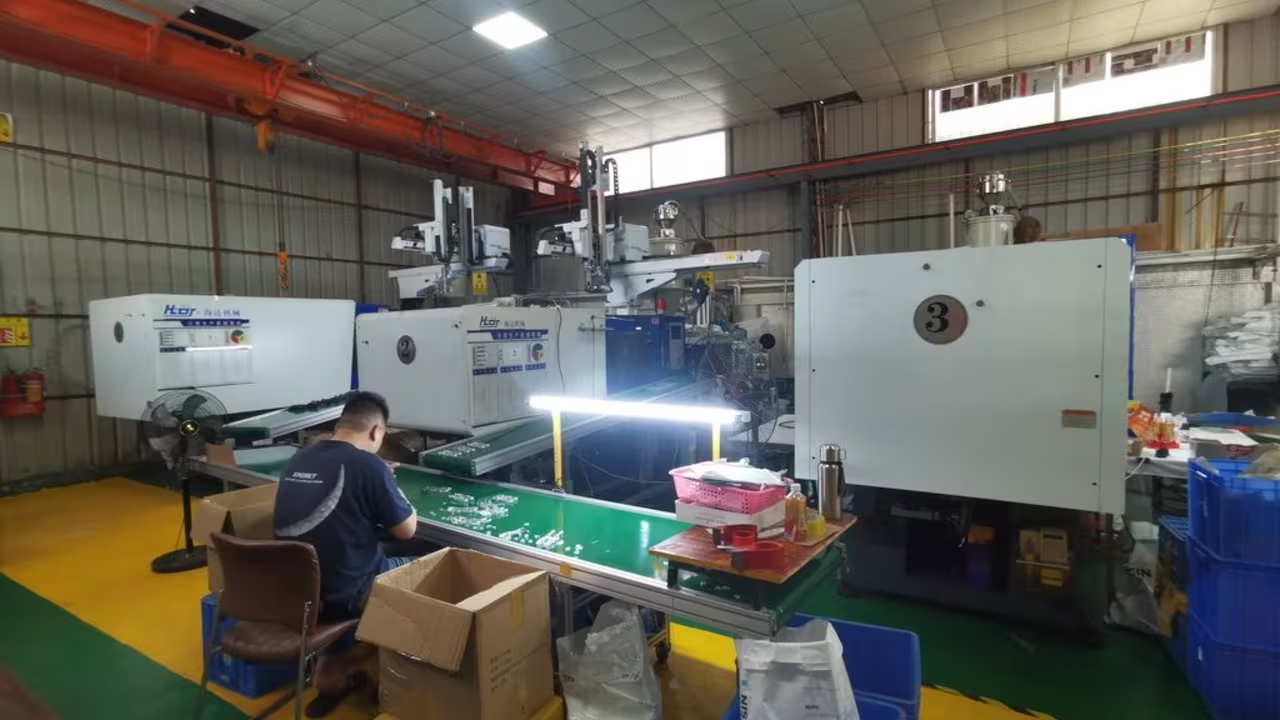
A During Production Inspection is a mid-production check performed while manufacturing is still running. Part of the order is complete and available for sampling, while the remaining quantity is still being made. The exact timing depends on the product, factory schedule, production speed, and number of completed units.
DPI is useful when the buyer needs to see production progress, workmanship patterns, material or component consistency, measurements, selected in-process function checks, and whether corrective actions are being followed. Its main advantage is time: recurring problems can be identified before they spread across the full batch.
What Is a Pre-Shipment Inspection?
A Pre-Shipment Inspection is a final check performed when production is complete or close to complete and enough goods are packed for representative sampling. It compares finished products with the purchase order, specification, approved sample, packaging standard, labels, and agreed quality criteria.
PSI gives the buyer evidence before shipment approval, final payment, or release to a freight forwarder, marketplace warehouse, 3PL, retailer, or distributor. Its main advantage is shipment control: it checks the actual finished and packed order rather than an earlier production snapshot.
When to Choose During Production Inspection
Choose DPI when early visibility is worth more than waiting for the final packed order. It is particularly useful when defects could repeat across a large batch or when the supplier still has meaningful time to act on the findings.
- The supplier is new or has an inconsistent quality history.
- The product has several components, assembly steps, tight tolerances, or finish requirements.
- The order is large, high value, or produced over several days or weeks.
- Previous defects or corrective actions need to be checked during the next run.
- You need evidence of production progress before making a commercial or scheduling decision.
During Production Inspection Checklist
A DPI checklist should focus on production status, trend evidence, and process consistency. It is not a final shipment approval because the complete order and final packing may not yet exist.
| Inspection area | What DPI should check | Decision value |
|---|---|---|
| Production status | Finished, in-process, pending quantities, line status, and realistic completion progress. | Shows whether sampling is meaningful and the order is on schedule. |
| Workmanship trends | Repeated scratches, dents, cracks, stains, loose parts, stitching, glue, finish, or assembly issues. | Finds recurring patterns before they affect the full run. |
| Process consistency | Assembly, finishing, packing-preparation, and quality-control steps across operators and production batches. | Finds variation before it carries into later units. |
| Materials and components | Visible material quality, component match, color, finish, construction, and approved-sample alignment. | Flags substitution or consistency risks early. |
| Measurements and specifications | Critical dimensions, weight, tolerance, print or logo position, and product-specific requirements. | Confirms whether the process is following the buyer's standard. |
| In-process function checks | Selected assembly, fit, power-on, movement, opening, closing, load, or usability checks. | Identifies functional risk while changes may still be possible. |
| Packaging readiness | Available retail packaging, inserts, manuals, labels, polybags, carton preparation, and packing instructions. | Flags packaging or labeling risk before final packing begins. |
| Corrective priorities | Defect patterns, clear photos, affected locations, frequency, and practical next steps. | Turns the visit into supplier actions rather than a vague quality comment. |
When to Choose Pre-Shipment Inspection
Choose PSI when the buyer needs final evidence before goods leave the factory. It is the standard final checkpoint for many orders because product condition, packed quantity, labels, accessories, cartons, and shipment marks can be reviewed together.
- Production is complete or close to complete and the order is substantially packed.
- You need to approve shipment, request rework, or hold the order before dispatch.
- Quantity, SKU mix, size, color, assortment, and packing-list accuracy must be confirmed.
- Final packaging, labels, barcodes, manuals, accessories, cartons, and shipping marks matter.
- You need photo evidence before final payment or release to logistics.
Pre-Shipment Inspection Checklist
A PSI checklist should be broad enough to support a final shipment decision. Adapt it to the product, destination, buyer specifications, packing method, sales channel, and agreed defect limits.
| Inspection area | What PSI should check | Decision value |
|---|---|---|
| Quantity and assortment | Total units, SKUs, variants, sizes, colors, carton quantity, and packing-list match. | Finds shortages, mixed assortments, and wrong quantities. |
| Workmanship and specifications | Defects, dimensions, weight, material, color, finish, components, accessories, and approved-sample match. | Confirms whether finished goods match the order. |
| Function and visible risk checks | Selected product-specific tests plus visible sharp edges, loose parts, instability, or missing buyer-specified warnings. | Documents obvious functional or physical concerns; it is not a compliance certification. |
| Packaging and labels | Retail boxes, protection, polybags, inserts, manuals, accessories, labels, barcodes, and placement. | Reduces damage, receiving delays, and identification errors. |
| Cartons and shipping marks | Carton count, condition, weight, dimensions, packing quantity, PO, SKU, destination, and handling marks. | Supports freight handling, receiving, and traceability. |
| Defects and report | Critical, major, and minor counts, photos, measurements, test results, packing evidence, and next steps. | Supports approval, correction, re-inspection, or shipment hold. |
Which Inspection Reduces More Risk?
Neither inspection is automatically better. DPI reduces production risk by finding patterns while the supplier may still correct the process. PSI reduces shipment risk by checking the final goods before release. The more useful checkpoint is the one aligned with the buyer's unresolved risk.
A stable repeat order may need only PSI. A new supplier, changed material, complex assembly, large order, recurring defect, or tight tolerance may justify DPI followed by PSI. Early findings can guide correction; the final visit confirms whether the correction and packed order are acceptable.
When DPI and PSI Work Better Together
| Order situation | Practical inspection plan | Why |
|---|---|---|
| New supplier | Factory Audit before commitment, DPI during production, PSI before shipment. | Capability and process consistency are not yet proven. |
| Stable repeat supplier | PSI may be enough; add DPI when the product, material, or process changes. | Reliable history lowers early-stage uncertainty. |
| Large or high-value order | DPI plus PSI. | Early detection limits repeated defects; PSI confirms final release. |
| Complex product | Initial Production Check, DPI, and PSI according to risk. | Materials, first pieces, process, function, and final packing may all need separate evidence. |
| Tight shipping deadline | DPI as early warning, then PSI before release. | A serious issue found only at PSI may leave too little correction time. |
| Amazon FBA or ecommerce | PSI at minimum; add DPI if product or packaging consistency is uncertain. | Finished quality, labels, barcodes, packing, and cartons affect receiving and customer experience. |
How the Choice Changes by Buyer and Product
Importers often use DPI for factory visibility and corrective-action discussions, then PSI for the final release decision. Amazon FBA and ecommerce sellers usually place extra weight on PSI because final packaging, barcode, label, assortment, and carton errors can interrupt receiving or create customer complaints.
For apparel, DPI can identify stitching, shade, and measurement drift while production continues; PSI can verify packed size-color assortment and labels. For electronics accessories, DPI can expose fit, assembly, or cosmetic trends; PSI can verify final function checks, accessories, labels, packaging, and carton marks.
For home goods, DPI can detect finish, dimension, or assembly-fit variation before the run is complete; PSI can verify the finished product, protective packing, accessories, manuals, barcodes, and shipping marks. Procurement and sourcing teams can use the two reports to document corrective actions and final supplier performance.
AQL Sampling and Defect Classification at Each Stage
Both DPI and PSI can use representative sampling, but the result supports a different decision. During DPI, sampling helps identify patterns in the available units and guide process correction. During PSI, sampling supports the final lot assessment against agreed defect limits.
Critical, major, and minor definitions should be agreed before inspection and adapted to the product, destination, function, appearance standard, and buyer requirements. A sampling result is evidence for a business decision; it is not a guarantee that every defect in the lot has been found.
Do not treat a DPI pass as final shipment approval or a PSI pass as an automatic instruction to ship. Review the defect pattern, report evidence, supplier response, and commercial risk.
Common Mistakes When Choosing DPI or PSI
- Using PSI as the first and only check for a complex or high-risk product, then finding process problems too late.
- Booking DPI before enough completed units exist for meaningful sampling.
- Assuming DPI confirms final quantity, packing, labels, cartons, and shipment readiness.
- Sending an incomplete specification and leaving the inspector to guess what is acceptable.
- Letting the supplier define the checklist without buyer-side tolerances, references, and defect rules.
- Approving shipment without reviewing defect photos, measurements, packing observations, and next steps.
What to Prepare Before Booking DPI or PSI
The inspector should not have to infer the buyer's requirements from a product name or supplier explanation. Send a decision-ready inspection pack before the visit.
- Purchase order, product description, factory address, contact, production stage, and target date.
- Order quantity, packing list, SKU list, size-color breakdown, and estimated completion percentage.
- Specification sheet covering materials, dimensions, tolerances, components, colors, finish, and function.
- Approved sample, drawings, comparison photos, packaging files, labels, barcodes, manuals, and carton marks.
- Product-specific test method, sample expectations, defect classification, and agreed acceptance rules.
- Previous quality issues and corrective actions that should be verified.
How Asia Product Inspections Supports DPI and PSI Decisions
Asia Product Inspections can help buyers match the inspection scope to the actual order stage across China, Vietnam, India, Indonesia, Pakistan, and the Philippines. During production, the focus can include output progress, recurring workmanship, process consistency, measurements, specification points, visible defect patterns, and selected in-process checks.
Before shipment, the focus can include finished products, quantity and assortment, workmanship, packaging, labels, manuals, barcodes, carton condition, packing accuracy, selected function checks, defect evidence, and shipment readiness. The report gives the buyer documented findings and photos for supplier follow-up and the next commercial decision.
Share the product, factory location, order stage, target inspection date, and critical requirements to confirm whether DPI, PSI, or a staged plan fits the order.
Use DPI for Time to Correct and PSI for Evidence to Release
DPI and PSI are not competing services. DPI gives early visibility into production quality and time for supplier correction. PSI gives final evidence on the finished and packed order before shipment. The right choice depends on which risk remains unresolved and what action is still possible.
For a stable repeat order, PSI may be enough. For a new supplier, complex product, large order, tight tolerance, recurring defect, or compressed schedule, DPI followed by PSI can provide stronger control from production through shipment release.
FAQ
FAQ: During Production Inspection vs Pre-Shipment Inspection
01What is the difference between During Production Inspection and Pre-Shipment Inspection?
+
DPI happens while production is still running and supports early correction. PSI happens when goods are finished or nearly finished and packed for representative sampling, supporting the final shipment decision.
02Is DPI better than PSI?
+
DPI is stronger for early issue detection and process correction. PSI is stronger for final quantity, packing, labeling, carton, and shipment-readiness control. Higher-risk orders may need both.
03Can DPI replace a Pre-Shipment Inspection?
+
Usually not when final shipment evidence is required. DPI may not confirm the complete packed quantity, final assortment, labels, barcodes, carton condition, or shipment readiness.
04Can PSI replace a During Production Inspection?
+
Sometimes, especially for stable repeat orders with lower production risk. For new suppliers, complex products, large orders, or recurring defects, PSI alone may identify problems too late for easy correction.
05When should I book a During Production Inspection?
+
Book DPI when enough completed units exist for meaningful sampling and the remaining production is still running. A practical window may fall roughly between 20% and 80% completion, depending on the product and order.
06When should I book a Pre-Shipment Inspection?
+
Book PSI when production is complete or nearly complete and enough goods are packed for representative sampling. Leave time to review the report and act before the planned dispatch.
07Does PSI include packaging and labeling checks?
+
Yes, when relevant to the order. The scope can include retail and protective packing, inserts, manuals, accessories, labels, barcodes, carton condition, packing quantity, and shipping marks.
08Which inspection is most important for Amazon FBA sellers?
+
PSI is usually important because final product condition, quantity, FNSKU or other labels, barcodes, packaging, assortment, and cartons must be checked before shipment. Add DPI when product or supplier consistency is uncertain.
09Can the inspection follow my own checklist?
+
Yes. The inspection can be aligned with the purchase order, specification sheet, approved sample, drawings, packaging standard, test method, and agreed defect rules.
10What should I do if DPI or PSI finds defects?
+
Review the defect severity, frequency, pattern, photos, measurements, test findings, supplier response, and purchase agreement. Depending on the stage and risk, request process correction, sorting, rework, replacement, re-inspection, shipment hold, or another commercial remedy.