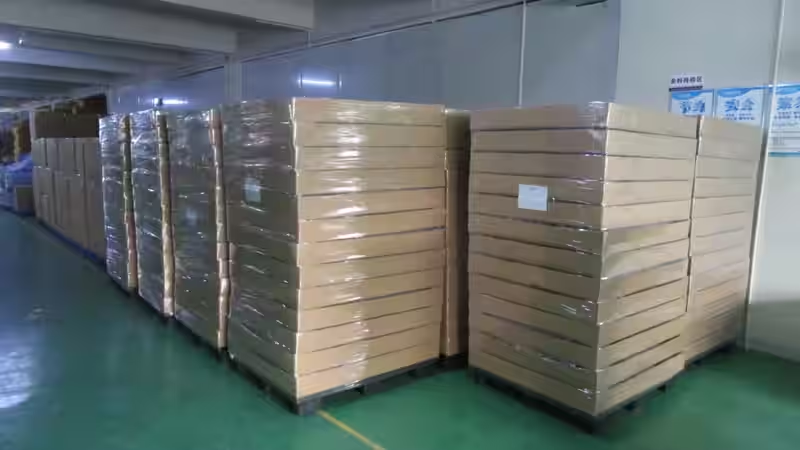
Why a China PSI Matters Before Shipment
Importing from China can give buyers access to a broad manufacturing base, supplier variety, and production scale. But those advantages also make disciplined supplier quality control important.
A product that looks correct in photos or supplier messages may still have quantity errors, workmanship defects, specification differences, packaging mistakes, labeling problems, or carton issues that only become visible on site.
A China pre-shipment inspection gives buyers clearer evidence before goods leave the factory and before final shipment approval.
Need evidence before your China supplier ships? Request a pre-shipment inspection from Asia Product Inspections before approving final shipment.
What Is a Pre-Shipment Inspection?
A pre-shipment inspection, often called a PSI, is a final quality control inspection before goods leave the factory. It is normally performed when production is complete or close to complete and enough units are packed for representative sampling.
The purpose is not to redesign the product or replace supplier quality control. The purpose is to verify shipment readiness and give the buyer field evidence before goods are released.
For China suppliers, a PSI commonly checks quantity, assortment, workmanship, measurements, specification points, labeling, manuals, barcodes, packaging, carton condition, packing accuracy, and selected on-site function tests.
Why Buyers Importing from China Need a PSI
Many buyers are not physically present at the factory before goods ship. Even responsive supplier communication can hide small but costly problems such as wrong carton marks, mixed color ratios, weak retail packaging, scratches, missing accessories, incorrect dimensions, unreadable barcodes, or failed basic functions.
| Risk without inspection | How a China PSI helps |
|---|---|
| Incorrect quantity or SKU mix | Compares packed goods, variants, cartons, and shipment records against the order details. |
| Workmanship defects missed by supplier QC | Samples finished units and records defects with close-up photos and a defect breakdown. |
| Wrong specs, materials, dimensions, or colors | Checks products against the buyer specification, approved sample, packaging standard, or agreed checklist. |
| Packaging and label errors | Reviews retail packaging, inner packing, carton labels, barcodes, shipping marks, and carton condition. |
| Unclear shipment decision | Provides inspection findings, photo evidence, risk observations, and a shipment-readiness conclusion. |
When Should Buyers Book a China Pre-Shipment Inspection?
The best timing is when the order is complete or close to complete and enough finished units are packed to allow representative sampling. Booking too early may mean the goods are not ready for a final shipment decision. Booking too late can create pressure because the supplier, forwarder, and shipping schedule may already be fixed.
| Buyer situation | Recommended action |
|---|---|
| Production is complete or nearly complete | Book a pre-shipment inspection before approving shipment. |
| Only part of the order is finished and problems may be developing | Consider a during production inspection while correction is still possible. |
| Supplier is new or order volume is increasing | Consider a factory audit to review capability, process, quality systems, and risks. |
| Shipment day risk is high | Consider container loading supervision for counts, container condition, handling, and seal details. |
What to Prepare Before the Inspection
The quality of the inspection scope depends on the quality of the information the buyer provides. A vague instruction such as check quality is rarely enough.
- Purchase order, invoice, and packing list with SKU, quantity, color, size, and assortment details.
- Specification sheet with dimensions, materials, components, colors, tolerances, and function requirements.
- Approved sample requirements, reference photos, artwork files, and packaging standard.
- Labeling, barcode, warning label, manual, retail box, and carton marking requirements.
- Amazon FBA requirements if the goods will ship to Amazon fulfillment.
- Known critical, major, and minor defects plus product-specific rejection rules.
- Factory name, address, contact person, target inspection date, and shipment deadline.
Need a checklist adapted to your product? Send the key documents before the inspection so the scope is clear.
China Pre-Shipment Inspection Checklist
Use this checklist before goods leave a China factory. The exact scope should be adapted to the product category, order value, buyer requirements, destination market, and known supplier risks.
| Inspection area | What buyers should check | Why it matters | Evidence to request |
|---|---|---|---|
| Product quantity | Units, cartons, SKUs, size/color breakdown, assortment, spare parts, accessories, and packed quantity. | Avoid short shipment, over shipment, SKU mix-ups, and inventory mismatch. | Count photos, packing list comparison, carton count notes. |
| Workmanship | Scratches, dents, cracks, stains, rust, poor stitching, loose parts, deformation, sharp edges, glue marks, missing parts, or inconsistent assembly. | Poor workmanship can create returns, complaints, negative reviews, and brand damage. | Defect close-ups, defect count, sampled unit photos. |
| Product specifications | Model, size, material, color, finish, construction, accessories, configuration, printing, artwork, logo placement, and approved sample match. | Confirms that the shipped product matches what was ordered. | Reference comparison photos and specification checklist. |
| Dimensions and weight | Product dimensions, carton dimensions, gross weight, net weight, retail box size, and tolerance points. | Wrong dimensions or weights can affect performance, packaging, freight cost, receiving, and listings. | Measurement photos, scale photos, recorded tolerances. |
| Colors, materials, and components | Color consistency, material type, component quality, included accessories, inserts, hardware, fabric, and packaging components. | Material or component changes are common supplier risk points. | Color reference photos, component photos, material observations. |
| Functionality testing | Product-specific tests such as assembly, power-on, buttons, charging, zippers, locking, stability, fit, capacity, or usability checks. | A product can look acceptable but fail in normal use. | Test photos, notes, short videos where available, failure examples. |
| Safety checks | Sharp edges, loose small parts, exposed wires, unstable construction, warning labels, packaging warnings, and product-specific concerns. | Safety issues can create serious customer, marketplace, and regulatory risk. | Photos of risk points, warning labels, failed safety observations. |
| Packaging inspection | Retail box, inner packing, protective material, polybag, inserts, manuals, master carton, drop-risk protection, moisture concerns, and consistency. | Packaging protects the product in transit and affects customer experience. | Retail box photos, inner packing photos, carton packing method. |
| Labels and barcodes | Product labels, barcode placement and readability, SKU labels, manuals, warnings, destination labels, and artwork accuracy. | Labeling mistakes can delay receiving or create marketplace problems. | Label close-ups, barcode photos, manual and warning label photos. |
| Carton markings and shipping marks | Carton number, SKU, quantity, weights, dimensions, handling marks, fragile marks, orientation marks, destination references, and agreed shipping marks. | Clear marks reduce receiving mistakes and shipment confusion. | Carton side photos, marking close-ups, carton condition notes. |
| Amazon FBA requirements | FNSKU or seller barcode, suffocation warnings, carton labels, set labels, packaging strength, polybag and bundle requirements, and shipment plan alignment. | Preventable label or packaging errors can delay receiving or create fulfillment problems. | Barcode and carton label photos, packaging notes, SKU match evidence. |
| Defect classification | Critical, major, and minor defects agreed before inspection. | Clear classes help the buyer interpret the result and avoid arguments after inspection. | Defect table, photos by defect type, severity notes. |
| AQL sampling | Sampling plan, inspection level, acceptance limits, and buyer-specific rules. | AQL gives a structured way to evaluate batches without opening every unit. | Sample size notes, AQL result summary, sampled carton records. |
| Photos and inspection report | Overall product photos, defect photos, packaging, labels, measurements, cartons, factory context, and a readable summary. | Photos support buyer decisions and supplier follow-up. | Full report with photo evidence and clear next steps. |
| Final decision before shipment | Pass, fail, hold shipment, rework, re-inspect, sort, replace, accept with concession, or escalate. | The goal is a practical shipment decision before goods leave China. | Shipment-readiness conclusion and recommended next steps. |
Amazon FBA Inspection Checks for China Suppliers
Amazon FBA sellers importing from China should treat product quality and receiving readiness as separate but connected risks. A product may pass workmanship checks but still create problems if the barcode is wrong, carton labels are missing, packaging is weak, or bundle requirements are unclear.
- Confirm SKU, FNSKU, barcode, and label placement match buyer requirements.
- Check product packaging, polybags, sets, warning labels, and retail packaging consistency.
- Verify carton labels, carton counts, carton condition, carton dimensions, and carton weights.
- Check product quantity and assortment against the shipment plan and packing list.
- Take clear photos of retail packaging, barcode labels, master cartons, and carton markings.
Defect Classification and AQL Sampling
A strong product inspection checklist should define defect severity before inspection. Without clear defect classification, the supplier may argue that defects are cosmetic while the buyer sees them as unacceptable.
AQL sampling helps buyers make a structured batch decision based on representative sampling, documented defects, and agreed acceptance criteria. It reduces risk but does not guarantee that every unit in the shipment is defect-free.
| Defect type | Typical meaning | Importer example |
|---|---|---|
| Critical | A serious safety, compliance, or usability concern that may make the product unacceptable. | Exposed wiring, sharp edge on a child-facing product, severe contamination. |
| Major | A defect that affects function, saleability, customer acceptance, or required specifications. | Wrong color, broken component, missing accessory, failed function test, incorrect size. |
| Minor | A smaller defect that may not affect function but still matters for appearance or brand standards. | Small scratch, slight print imperfection, minor packaging scuff within agreed limits. |
Examples for Importers Buying from China
| Buyer type | Common risk before shipment | Useful PSI focus |
|---|---|---|
| Amazon FBA seller | Wrong barcode, weak packaging, mixed SKU cartons, incorrect set labeling. | Barcode and labeling checks, carton marks, packaging condition, quantity and photo evidence. |
| Ecommerce brand | Batch inconsistency, packaging damage, cosmetic defects, incorrect accessories. | Workmanship, approved sample comparison, packaging, components, photos by defect type. |
| Private-label business | Logo placement error, wrong finish, wrong material, retail box artwork issue. | Specification match, artwork check, color/material review, retail packaging verification. |
| Sourcing manager | Supplier says goods are ready, but quantity or quality is unclear. | Order readiness, quantity, defect breakdown, shipment-readiness conclusion. |
| Procurement team | New or fast-growing supplier has inconsistent process control. | Factory audit before scaling plus product inspection before shipment. |
China PSI vs Other Quality Control Services
A PSI is powerful, but it is not the only quality control tool. Buyers should choose the right service based on where they are in the sourcing cycle.
| Service | Best timing | Main purpose |
|---|---|---|
| Factory audit | Before placing or expanding orders with a supplier. | Assess supplier capability, organization, production flow, quality process, readiness, and risks. |
| Initial production check | At the start of production or during the first batch. | Review materials, components, first pieces, and production readiness. |
| During production inspection | When part of the order is finished and the rest is still running. | Catch workmanship, process, and consistency issues while correction is still possible. |
| Pre-shipment inspection | When production is complete or close to complete and enough units are packed. | Verify finished products, packaging, and shipment readiness before goods leave the factory. |
| Container loading supervision | On shipment day during container loading. | Check container condition, carton counts, handling, shipment matching, and seal details. |
What Can Go Wrong Without a China PSI?
When buyers skip inspection, problems often move from the factory floor to the destination market. Fixes become slower, more expensive, and harder to negotiate.
- Defective goods are discovered only after arrival at the warehouse or fulfillment center.
- Cartons contain the wrong SKU, color, size, or quantity.
- Retail packaging or carton labels do not match buyer requirements.
- Products fail basic function checks or do not match approved samples.
- Amazon FBA or ecommerce receiving problems appear after goods have already shipped.
- The buyer has limited evidence for supplier rework, replacement, discount, or corrective action discussions.
How Asia Product Inspections Can Help
Asia Product Inspections provides on-the-ground inspection, audit, and quality control support across Asia, including China. For China pre-shipment inspection, the service is positioned as a final check before goods leave the factory.
The inspection scope may include quantity and assortment, workmanship and visual defects, measurements and specification points, labels, manuals, barcodes, packaging, carton condition, packing accuracy, and selected on-site function tests.
For repeat or active clients, the Inspection Portal App can centralize inspection requests, live status tracking, reports, photos, files, and inspection-specific communication in one workspace.
Contact Asia Product Inspections before your supplier ships. Share the factory location, product details, order stage, and target shipment date.
Inspect Before Goods Leave China
A China pre-shipment inspection gives buyers a practical control point before finished goods leave the factory. It helps importers, Amazon FBA sellers, ecommerce brands, private-label businesses, sourcing managers, and procurement teams verify quantity, workmanship, specifications, packaging, labels, cartons, and shipment readiness.
The best results come from clear preparation: a complete product specification sheet, purchase order, approved sample requirements, packaging standard, labeling requirements, defect classification rules, and target inspection date.
Ready to inspect your China shipment? Request a pre-shipment inspection or get a product inspection quote for your China order.
FAQ
FAQ: China Pre-Shipment Inspection
01What is included in a China pre-shipment inspection?
+
A PSI can include product quantity and assortment, workmanship and visual defects, measurements and specification points, labeling, manuals, barcodes, packaging, carton condition, packing accuracy, and selected function tests where relevant.
02When should I book a pre-shipment inspection in China?
+
Book it when the order is complete or close to complete and enough units are packed for representative sampling. It should happen before goods leave the factory and before final shipment approval.
03Can the inspection follow my own product inspection checklist?
+
Yes. The inspection can be aligned with a specification sheet, approved sample, packaging standard, or agreed checklist. The more precise the checklist, the more useful the report.
04Does a PSI replace a factory audit?
+
No. A factory audit reviews supplier capability and process risk, usually before orders are placed or scaled. A PSI checks finished goods and shipment readiness before dispatch.
05Does a PSI replace during production inspection?
+
No. During production inspection happens while production is still running. PSI happens when goods are complete or close to complete and largely packed.
06Should Amazon FBA sellers use a China pre-shipment inspection?
+
Yes, it is often useful because it can check product condition, quantity, packaging, barcodes, carton labels, carton condition, and shipment readiness before inventory leaves China.
07What happens if the inspection finds defects?
+
The buyer can review the defect breakdown and photo evidence, then decide whether to request rework, sorting, replacement, re-inspection, shipment hold, or acceptance with a documented concession.
08Can a PSI guarantee there are no defects in the shipment?
+
No. A PSI provides structured sampling, field evidence, and a shipment-readiness conclusion. It reduces risk but should not be presented as a legal guarantee or absolute product guarantee.